
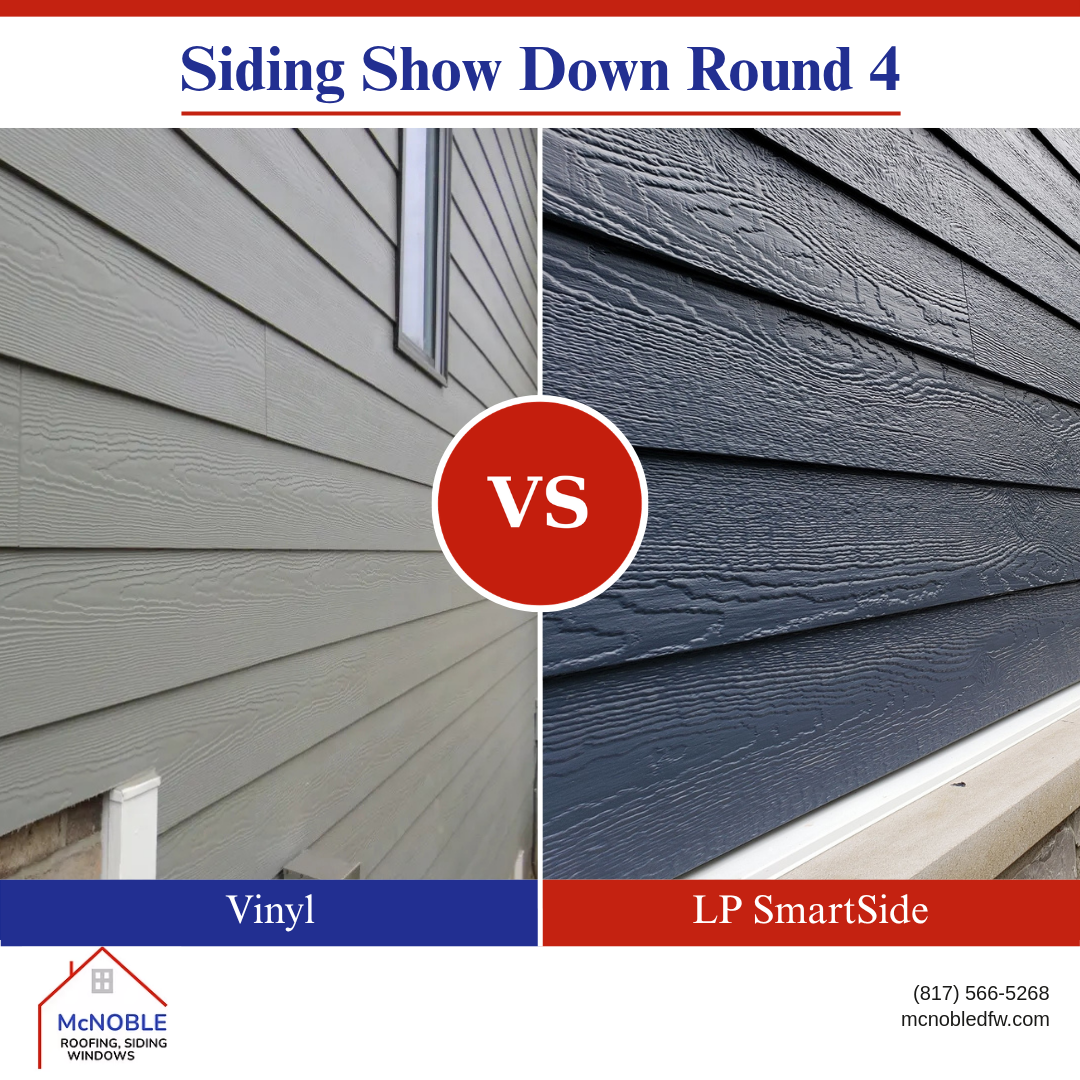
This is the latest entry in our Siding Showdown series, where we compare two real siding options head to head. This time it is vinyl, the most common siding in the country, against LP SmartSide, an engineered wood product that looks and installs more like traditional wood. They solve the same problem in very different ways, and North Texas weather tests both of them.
What Each Material Is
Vinyl siding is made from PVC and is the lightest and most affordable of the major siding types. It is formed into panels that lock together and hang loosely on the wall, so they can move as temperatures change.
LP SmartSide is made from wood strands bonded with resins and treated for moisture, decay, and termite resistance, which LP calls its SmartGuard process. It is installed and cut like wood, and it takes paint in a way vinyl cannot.
Heat: Why Vinyl Installation Matters in DFW
Vinyl moves with temperature. The Polymeric Exteriors Products Association (formerly the Vinyl Siding Institute) notes that vinyl can expand and contract half an inch or more over a 12 foot 6 inch length. That is why vinyl is hung with fasteners centered in the slots and left loose enough to slide, and why panels that are nailed too tight tend to ripple or buckle in summer heat.
In a place where summer afternoons regularly pass 100 degrees, the quality of the installation matters as much as the product. A well installed vinyl system handles heat just fine. A poorly installed one is where waviness and gaps show up.
LP SmartSide does not move the same way. It behaves more like wood, which brings its own requirement: the edges, cuts, and any penetrations need to be sealed so moisture cannot get into the substrate.
Hail: What the Manufacturers Actually Say
Hail is the question most DFW homeowners care about, so it is worth being careful about claims.
On the engineered wood side, LP states that its siding is warranted to resist damage from hail up to 1.75 inches in diameter, provided it is properly installed and maintained according to LP's instructions. That is a warranty promise with conditions, so read the actual document before relying on it.
On the vinyl side, manufacturers tend to describe the risk in general terms. CertainTeed, for example, says that hail and flying debris can crack or dent thin vinyl, and offers thicker and foam backed vinyl lines designed to resist impact. In other words, not all vinyl is equal. A thin builder grade panel and a thick insulated one perform very differently in a hailstorm.
The honest takeaway is that neither material is hail proof. If hail is your biggest worry, ask the contractor for the specific product, its thickness or construction, and what its warranty says about hail.
Warranty: Read the Structure, Not Just the Number
LP markets a 5/50 warranty. According to LP, the warranty explainer describes the first five years as full replacement coverage for labor and materials, and years six through fifty as prorated coverage that pays only part of the material cost. The 50 in the name is real, but the value of the coverage drops over time.
Vinyl warranties vary widely by manufacturer and product line, with some offering transferable limited lifetime coverage and others offering much less. As with LP, the details of what is covered, for how long, and whether it transfers to a new owner matter more than the headline.
Maintenance and Look
Vinyl is the lowest maintenance option. The color runs through the material, so it does not need repainting, and it usually needs only periodic washing. The tradeoff is a more limited look and a color that cannot be changed without replacing the panels.
LP SmartSide gives the look of wood with more design flexibility, including paintable surfaces. It does require staying on top of the finish and sealing cuts and any damage, because exposed wood is where problems start.
Cost
Vinyl is generally the more affordable material up front, and LP SmartSide costs more. Installed prices vary by home, product line, and scope, so a written estimate from a contractor is the only reliable number.
Which Fits Your Home?
Vinyl makes sense if you want the most economical option and low upkeep, and you choose a thicker or insulated line and a good installer. LP SmartSide makes sense if you want the look of wood, more paint and color options, and a hail warranty backed by a manufacturer, and you are comfortable with a little more care over time.
Either way, installation quality counts for at least as much as the product. If you would like to compare these two for your own home, we are happy to walk the exterior with you and talk through what fits. You can also read our siding maintenance checklist to see what upkeep looks like over time, then visit our siding services page or contact us for a free inspection.
Sources referenced in this post:
Polymeric Exteriors Products Association, Vinyl Siding Installation Tips and Tricks
LP Building Solutions, The What's and Why's of the LP SmartSide 5/50 Limited Warranty
Internal Links Used in This Post:
Siding Maintenance Checklist for DFW Homeowners (existing blog post)
Siding Services (service page)
Contact (contact page)