
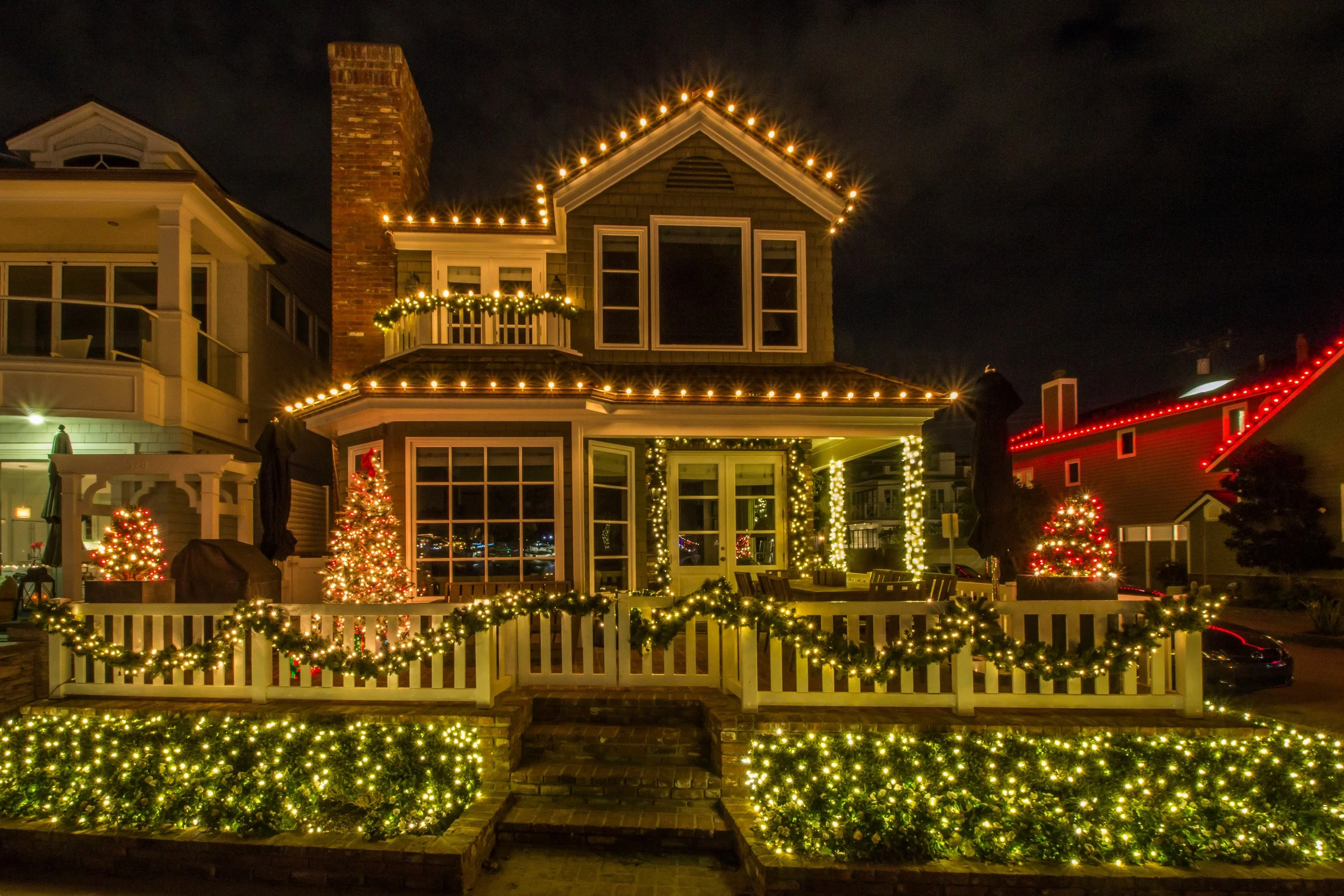
Early November is when a lot of DFW homeowners pull the lights out of the garage, and it is also when a lot of siding picks up its most avoidable damage of the year. Nails, staples, and adhesive hooks are the usual culprits, and the marks they leave tend to stay long after the season ends. The good news is that every major siding type has a damage-free way to hold a strand of lights, and the manufacturers say so plainly.
Start With the Roofline, Not the Siding
The simplest rule is to avoid attaching anything to the siding at all. James Hardie's own guidance on hanging lights advises against nails, staples, and glue on siding and trim, and recommends outdoor-rated clips that attach to gutters or roof shingles instead. That one choice covers most homes, because the roofline is where most people want the lights anyway.
If your lights run along the gutter or the edge of the roof, use clips made for that spot and leave the siding alone. Clips designed for gutters and shingles hold a strand in place without putting a single hole in the wall below.
Vinyl Siding: Let It Move
Vinyl behaves differently from other siding because it is designed to shift with the temperature. The Polymeric Exteriors Products Association, the trade group formerly known as the Vinyl Siding Institute, notes that vinyl can expand and contract half an inch or more over a 12 foot 6 inch length, and that installers should keep fasteners centered in the slots so panels can slide freely. Their guidance is not to face-nail or staple through the siding.
That is exactly why pushing a nail or staple through the face of a vinyl panel to hold a light strand is a bad idea. It pins the panel in place, so when a cold morning gives way to a warm afternoon, the panel cannot move the way it was built to and can buckle or crack around the fastener. Here is what works better:
Use clips made specifically for vinyl siding, which hook over the bottom edge of a panel instead of piercing it.
Run lights along the roofline, gutter, or the top of a window or door rather than across the open wall.
Where the lights have to cross the siding, use J-channel or trim lines as natural paths, and secure the cord to the trim side, not the panel face.
LED strands are also a good fit for vinyl. The U.S. Department of Energy describes LEDs as using only a small fraction of the electricity that incandescent lights use, and they run cooler, which is gentler on both cords and nearby siding.
Fiber Cement (James Hardie): Skip the Wall Fasteners if You Can
Fiber cement is tough, but it is not forgiving about holes. A nail or screw hole in a painted plank leaves bare material exposed, and it is nearly impossible to hide. James Hardie recommends the no-fastener approach first. If you truly must attach something directly to the siding, their guidance is to use a corrosion-resistant nail or screw long enough to reach the framing or sheathing behind the siding, and on horizontal lap siding to place it roughly three quarters of an inch to one inch above the bottom edge of the plank.
For most homeowners, the better answer is to stay on the roofline and use clips. If a fastener hole does end up in a painted plank, ask about the manufacturer's touch-up products for pre-finished boards rather than reaching for whatever paint is in the garage. Matching a factory finish is harder than it looks.
LP SmartSide: Protect the Wood
LP SmartSide is an engineered wood product, so unsealed holes matter more than they do on other materials. The manufacturer's installation and product literature stresses sealing exposed cut edges, and the same logic applies to any hole you drill or drive into the face of a board. Unsealed wood can take on moisture over time.
The practical takeaway is simple. Avoid putting fasteners into SmartSide for lights, use roofline and gutter clips, and if a hole does happen, seal it and touch it up rather than leaving it open through the winter.
Electrical and Ladder Safety
The bigger risk during holiday decorating is rarely the siding. It is the person on the ladder. Data from the Consumer Product Safety Commission, summarized by USAFacts, show roughly 18,400 emergency room visits per year tied to holiday decorating between 2013 and 2022, and many of the adult injuries involve slipping or falling from a chair, ladder, or roof. A few habits go a long way:
Set the ladder on firm, level ground, and ask someone to steady it or stay nearby while you work.
Use only lights rated for outdoor use, and check each strand for cracked sockets, frayed wires, or loose connections before it goes up. The CPSC's holiday safety guidance recommends discarding any set with damage like that.
Plug outdoor lights into a GFCI-protected outlet.
Turn the lights off at night and when you are away from home.
If part of your roofline is steep, two stories up, or hard to reach, hire a professional installer instead of stretching from the ladder.
A Quick Note for After the Season
When January comes, take the lights down by unclipping rather than pulling. Tugging on a cord that is still caught on a clip is a common way to crack a corner of vinyl or knock a gutter loose. It is also a good moment to walk the exterior and look for anything that came loose, cracked, or got scuffed during the install. Our siding maintenance checklist walks through what to look for, season by season.
If you already see damage around a spot where lights were hung in past years, or you are not sure whether a mark is cosmetic, we are happy to take a look. Visit our siding services page or contact us to schedule an inspection.
Sources referenced in this post:
Polymeric Exteriors Products Association, Vinyl Siding Installation Tips and Tricks
USAFacts, Christmas Decorating Injuries (CPSC NEISS data, 2013 to 2022)
U.S. Consumer Product Safety Commission, Holiday Decorating Safety